A Phinisi Raja Ampat Cost Guide: Deconstructing Schooner vs. Liveaboard Pricing
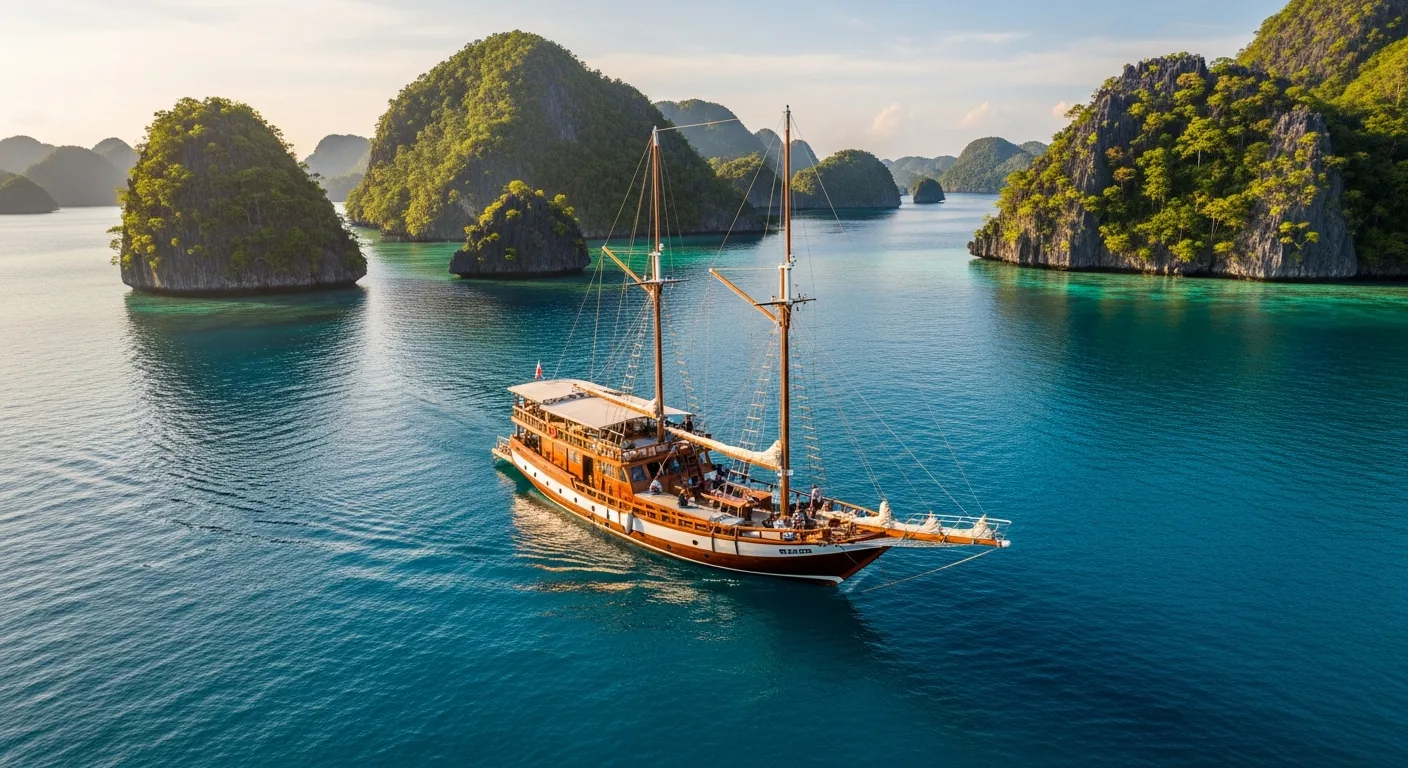
The pre-dawn air in the Dampier Strait is thick with the scent of petrichor from a passing squall and the faint aroma of Sulawesi coffee brewing in the galley. The only sounds are the gentle lapping of water against a hand-laid ironwood hull and the soft creak of the rigging. This is the sensory overture to a day of diving in Raja Ampat from the deck of a traditional phinisi schooner. For the discerning diver, the question is not whether to explore this epicenter of marine biodiversity, but how. The choice between a heritage phinisi Raja Ampat expedition and a modern, purpose-built liveaboard is often framed by cost, yet the numbers on a price list tell only a fraction of the story. The true value is calculated in terms of experience, intimacy, and access to one of the planet’s last marine frontiers.
Discerning the financial nuances requires moving beyond simple per-night rates. It involves a detailed analysis of vessel philosophy, itinerary logistics, and the unquantifiable value of authenticity. This guide deconstructs the pricing structures of both vessel types, providing a clear framework for making a sound investment in your next dive expedition to the heart of the Coral Triangle. See also: see Phinisi Raja Ampat’s About.
The Anatomy of Expedition Costs in the Coral Triangle
Calculating the cost of a Raja Ampat dive charter is an exercise in component analysis. The final figure is an aggregate of vessel class, trip duration, specific itinerary, and a host of inclusions that vary significantly between operators. The region’s operational complexities—its remoteness, the logistics of provisioning, and the imperative of conservation—all factor into the pricing. According to Marco Bianchi, an expedition leader with over 5,000 logged dives in these waters, “The primary cost drivers are fuel, which is dictated by the itinerary—a Misool route is far more fuel-intensive than a Dampier-focused trip—and the level of service, which correlates directly to the crew-to-guest ratio.” See also: Contact.
Key financial components to consider include:
- Vessel & Build Philosophy: A hand-crafted wooden raja ampat phinisi schooner, built over 18-24 months by Bugis artisans in South Sulawesi, carries a different capital cost and maintenance profile than a steel-hulled vessel produced in a modern shipyard. This heritage is reflected in the charter price.
- Itinerary & Duration: Trips typically range from 7 to 12 nights. Expeditions to the southern reaches of Misool, approximately 150 kilometers from the port of Sorong (SOQ), demand more time and resources, commanding a premium of 20-30% over central Raja Ampat itineraries focused on the Dampier Strait.
- Seasonality: The primary dive season runs from October through April, when seas are calmest and visibility is optimal. While charters are available year-round, pricing is highest during this peak period. Shoulder months like May and September can sometimes offer modest reductions.
- Inclusions & Levies: A critical factor is what the base price covers. All visitors are required to purchase a Raja Ampat Marine Park permit, costing IDR 1,000,000 (approximately $65 USD as of late 2023) and valid for 12 months. Some operators include this, while others list it as an additional charge.
The Phinisi Schooner: Valuing Heritage and Intimacy
The term ‘phinisi’ refers to a specific two-masted sailing rig and the traditional Indonesian vessel that bears it. These ships are not mere replicas; they are the product of centuries of maritime knowledge passed down through generations of Bugis and Makassan seafarers. Constructed primarily from heavy, durable woods like ironwood (kayu ulin) for the hull and teak (kayu jati) for the superstructures, a phinisi cruise raja ampat offers a tangible connection to the archipelago’s history. This commitment to craftsmanship forms the foundation of its premium positioning. The experience is defined by a smaller scale. Vessels like the Mutiara Laut or the Silolona accommodate between 10 and 14 guests, fostering a private, club-like atmosphere. This contrasts sharply with larger liveaboards that may carry upwards of 24 divers.
The financial investment in a phinisi, typically ranging from $450 to over $750 USD per person per night, buys exclusivity and personalization. With a higher crew-to-guest ratio, service is anticipatory rather than reactive. Dive groups are smaller, often just four divers to one guide, allowing for a more deliberate and less crowded exploration of sites like Cape Kri, where Dr. Gerald Allen famously identified 374 fish species on a single dive. The slower cruising speed of a phinisi, often seen as a drawback, is reframed by proponents as an advantage, allowing for a more immersive journey through the 1,500-plus islands of the archipelago rather than a high-speed transit between dive sites. See also: Phinisi Raja Ampat.
The Modern Liveaboard: A Calculus of Capacity and Efficiency
The modern, often steel- or aluminum-hulled, liveaboard represents a different approach to dive travel. Designed and built with diving as their singular purpose, these vessels prioritize function, space, and efficiency. A dedicated phinisi liveaboard raja ampat might share the same waters, but its operational philosophy is distinct. These boats are generally larger, accommodating 16 to 28 guests, which allows for a lower per-person cost through economies of scale. The price point for a reputable modern liveaboard in Raja Ampat typically falls between $350 and $550 USD per person per night.
This price point delivers considerable value for the dedicated diver. Cabins may be more uniform in size, and amenities often include large, climate-controlled camera rooms with multiple charging stations, dedicated rinse tanks for photography gear, and expansive dive decks designed for efficient preparation and entry. Their powerful modern engines enable faster crossings between Sorong and remote areas like Misool, potentially maximizing the number of dive sites visited on a shorter itinerary. While they may lack the historical romance of a schooner, their stability and space are considerable assets, particularly for those prone to motion sickness or traveling with extensive equipment. The social environment is also different—more akin to a floating dive resort, with a larger group of international divers sharing the experience. See also: explore Phinisi Vs Motoryacht Raja Ampat.
Comparative Analysis: A Phinisi Expedition Raja Ampat vs. Standard Liveaboard
To clarify the decision-making process, a direct comparison of the core attributes is necessary. The choice is not simply between “good” and “bad” but between two different modes of exploration, each with a distinct character and corresponding price structure. The following table breaks down the key differentiators for a typical 10-night charter.
| Attribute | Traditional Phinisi Schooner | Modern Liveaboard |
|---|---|---|
| Vessel & Construction | Two-masted wooden vessel; traditional Bugis craftsmanship (ironwood, teak). | Steel or aluminum hull; modern naval architecture. |
| Guest Capacity | Intimate; typically 8-14 guests. | Larger groups; typically 16-28 guests. |
| Ambiance & Experience | Quiet, historic, high-touch service. Focus on the maritime journey itself. | Functional, social, dive-focused. Often more amenities like dedicated camera rooms. |
| Itinerary Flexibility | Higher potential for custom or flexible itineraries due to smaller group size. | Generally fixed itineraries designed for maximum efficiency. |
| Indicative Cost (Per Person/Night) | $450 – $750+ USD | $350 – $550 USD |
| Best For | Travelers seeking authenticity, privacy, and a holistic cultural and natural experience. | Dedicated divers focused on maximizing bottom time, photographers with extensive gear, budget-conscious groups. |
Itinerary Deep Dive: How Cape Kri, Misool, and the Dampier Strait Influence Price
The geography of Raja Ampat is a primary determinant of cost. An itinerary for a phinisi expedition raja ampat is not a one-size-fits-all proposition. The archipelago is broadly divided into two main diving regions accessible from Sorong: the central area, dominated by the Dampier Strait, and the southern region of Misool. A 7-night trip focusing on the Dampier Strait might have a lead-in price of $4,200 USD. This route offers celebrated sites like Manta Sandy, Blue Magic, and the record-holding Cape Kri. The proximity of these sites to one another and to the main port of Sorong means lower fuel consumption and less transit time.
In contrast, an expedition to Misool is a more significant logistical undertaking. The area, protected by the Misool Eco Resort and its Ranger Patrol, is renowned for its pristine soft corals, dramatic topography, and rich pelagic life at sites like Magic Mountain and Boo Windows. A 10- or 12-night trip is required to do it justice, and the charter price will reflect this. Expect to invest upwards of $6,000 to $8,000 USD for a comprehensive Misool expedition. The cost increase is directly attributable to the hundreds of nautical miles traveled, the higher fuel burn, and the extended provisioning required for the crew and guests. For many, the reward of diving these protected, nutrient-rich waters justifies the substantial premium.
Beyond the Sticker Price: Evaluating Inclusions and Exclusions
A frequent source of confusion when budgeting for a Raja Ampat trip lies in the fine print. The advertised charter fee is rarely the final cost. Prudent financial planning requires a thorough accounting of what is—and is not—included. A transparent operator will provide a clear list, but it is the traveler’s responsibility to verify.
Common Inclusions:
- Accommodation in the chosen cabin category.
- All meals, snacks, coffee, tea, and soft drinks.
- A set number of dives per day (typically 3-4), including tanks, weights, and weight belts.
- Services of an experienced dive guide.
- Transfers from Sorong (SOQ) airport to the vessel.
Common Exclusions (with estimated costs):
- International and Domestic Flights: Flights to Sorong (SOQ), usually via Jakarta (CGK) or Bali (DPS), can range from $300 to $600 USD round-trip from major Indonesian hubs.
- Marine Park & Port Fees: The Raja Ampat Marine Park fee ($65 USD) is often, but not always, excluded. Port clearance fees may add another $50-$100 USD.
- Dive Equipment Rental: A full set of gear (BCD, regulator, wetsuit, computer) can cost $40-$60 USD per day.
- Nitrox Fills: For certified divers, this typically costs an additional $10-$20 USD per day or a flat fee of around $150-$200 for the trip.
- Crew Gratuity: The industry standard is to recommend a gratuity of 10-15% of the charter fee, paid in cash at the end of the trip.
- Alcoholic Beverages: Beer, wine, and spirits are almost always an additional charge.
Planning Your Investment: A Step-by-Step Guide
Investing in a Raja Ampat expedition, whether on a historic phinisi or a modern liveaboard, is a significant financial commitment. A structured approach ensures that your investment aligns with your expectations.
First, define your priorities. Are you seeking the romance and heritage of a traditional raja ampat phinisi schooner, or is your primary goal to maximize dive time and photographic opportunities on a purpose-built platform? Your answer will immediately narrow the field of options.
Second, scrutinize the itinerary. Do you prefer the world-renowned diversity of the Dampier Strait, or are you drawn to the remote, pristine reefs of Misool? Be realistic about the time and budget required for each.
Third, conduct due diligence on the vessel and operator. Request the ship’s specifications, year of construction or last major refit, and safety credentials. Seek out recent, independent reviews from other divers. Inquire about the experience of the cruise director and the dive guides—their expertise is a critical component of the experience.
Finally, request a detailed, itemized quote. A reputable operator will transparently list all costs, inclusions, and exclusions. Confirm the payment and cancellation policies before making a deposit. This methodical approach transforms a potentially overwhelming decision into a clear, manageable process, ensuring your expedition to Raja Ampat is a sound and rewarding investment.
Consult with Our Expedition Specialists
The nuances of planning the definitive Raja Ampat expedition are best navigated with expert guidance. To receive a personalized quote based on your specific interests, group size, and preferred travel dates, please contact our team. We can provide detailed comparisons of our phinisi fleet and help you craft an itinerary that matches your vision.
Brand: Phinisi Raja Ampat
Phone: 0811-3941-4563
Email: sales@komodoluxury.com
Office: Jalan Sunset Road No. 88, Kuta, Badung, Bali 80361, Indonesia