Choosing Your Vessel: Phinisi Raja Ampat vs. The Modern Motoryacht
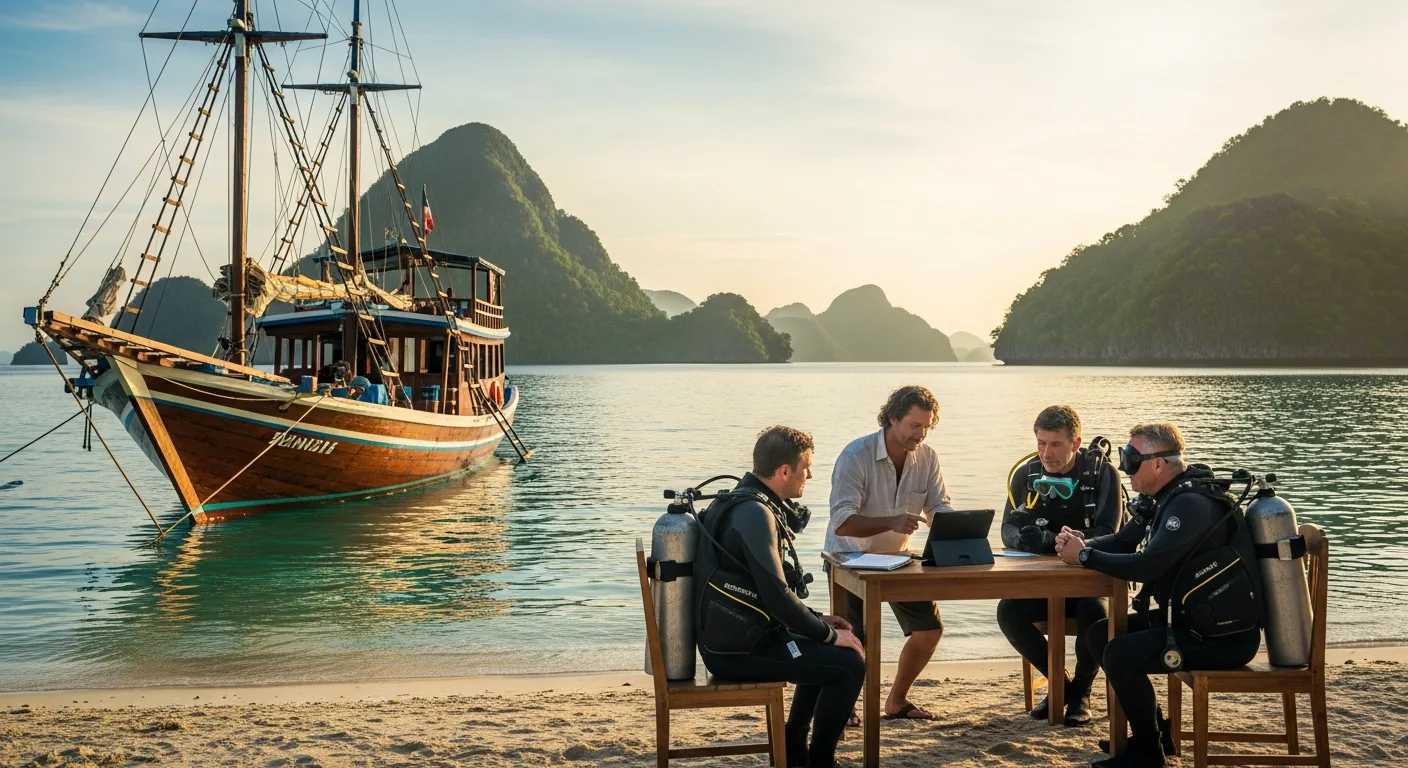
The pre-dawn air over the Dampier Strait is thick with the scent of clove and salt. On the teak deck of the phinisi, the only sounds are the gentle lapping of water against the ironwood hull and the soft creak of rigging. To the east, the sun begins to outline the karsts of Waigeo, casting long, sharp shadows across a sea of impossible turquoise. This is not merely a mode of transport; it is a deliberate immersion into the rhythm of the archipelago, a stark contrast to the hum of a generator and the urgency of a motoryacht’s schedule. The choice of vessel for your Raja Ampat expedition fundamentally defines the character of your time in these waters.
For the discerning diver, selecting a liveaboard in Raja Ampat is a decision that extends beyond cabin size and dive itineraries. It is a choice between two distinct philosophies of sea travel. The motoryacht represents efficiency, speed, and contemporary comfort. The traditional Indonesian schooner, the phinisi, offers heritage, a profound connection to the sea, and a pace that mirrors the tranquil majesty of the region itself. This analysis is for those who understand that the journey between dive sites is as significant as the descent below the surface. We will compare the merits of a phinisi Raja Ampat expedition against a motoryacht charter, providing the clarity needed to select the vessel that aligns with your intent for exploring the world’s most biodiverse marine ecosystem.
Phinisi vs. Motoryacht: A Connoisseur’s Comparison for Raja Ampat
The decision between a hand-built wooden schooner and a steel-hulled motoryacht is one of trade-offs. One prioritizes atmosphere and tradition, the other, speed and modernity. A phinisi liveaboard Raja Ampat is crafted according to boat-building traditions from Tana Beru in South Sulawesi, a practice recognized by UNESCO as a Masterpiece of the Oral and Intangible Heritage of Humanity in 2017. This heritage is palpable in every beam and plank. In contrast, a modern motoryacht is a product of naval engineering, designed for swift passage and often larger, more uniform interior spaces. Neither is inherently superior; they simply cater to different expectations for a diving expedition in Indonesia’s far east.
| Feature | Traditional Phinisi Schooner | Modern Motoryacht |
|---|---|---|
| Atmosphere & Experience | Authentic, serene, and deeply connected to Indonesian maritime culture. The sound of wind in the sails and the feel of the wooden vessel moving through water creates a quiet, reflective environment. | Contemporary, efficient, and often luxurious. The environment is climate-controlled and insulated from the elements. Social spaces can be larger and more formal. |
| Speed & Itinerary | Cruising speed of 6-8 knots. Itineraries are paced to the rhythm of the sea, encouraging a deeper appreciation of the journey. Ideal for dedicated regional exploration (e.g., Misool or Dampier Strait). | Cruising speed of 12-15+ knots. Can cover greater distances, potentially linking disparate areas like North and South Raja Ampat in a shorter timeframe. Itineraries can be more condensed. |
| Noise & Vibration | Quieter under sail, with the generator running primarily for utilities and diving compressors. The wooden hull absorbs sound, resulting in a more peaceful onboard experience, especially at anchor. | Constant low-frequency hum from engines and generators is typical. Vibration can be more pronounced, particularly in cabins closer to the engine room. |
| Connection to the Sea | Low-slung decks and open-air living spaces provide an immediate, tangible connection to the marine environment. You are part of the seascape, not just an observer. | Higher freeboard and enclosed, air-conditioned saloons can create a sense of separation from the outside environment. Views are often through windows. |
| Environmental Footprint | Utilizes wind power to supplement engine use, reducing fuel consumption. Traditionally built from locally sourced timber. Many modern phinisis incorporate advanced waste treatment systems. | Higher fuel consumption due to reliance on powerful engines. Larger vessels may have a greater displacement and impact. However, new models often feature highly efficient engines. |
| Diving Operations | Spacious, well-organized dive decks. Tenders are used for precision drop-offs at sites like Cape Kri. The slower pace allows for more flexible dive planning based on conditions. | Often feature large, state-of-the-art dive platforms. Efficiency is key, with dive schedules often being more structured and less flexible. |
The choice is ultimately personal. For a diver whose primary goal is to maximize the number of dive sites across a vast area, the speed of a motoryacht holds appeal. For the diver who seeks to inhabit the spirit of the Coral Triangle, to feel the pulse of the tides and winds, the raja ampat phinisi schooner is the more resonant choice.
Your Expedition Aboard a Phinisi Raja Ampat Schooner
A charter with Phinisi Raja Ampat is a fully curated diving expedition. We manage the logistics so you can focus on the unparalleled biodiversity of the region, which hosts more than 1,427 species of reef fish and over 600 coral species—roughly 75% of the world’s known total. Our expeditions are designed for a small group of discerning guests, ensuring personalized attention from our PADI-certified dive guides and dedicated crew of 12 to 15 professionals. See also: this fleet raja ampat.
The all-inclusive nature of our charters provides clarity and peace of mind. Your investment covers the essential elements of a seamless expedition: See also: book Home.
- Private, air-conditioned cabin with en-suite bathroom facilities.
- All meals prepared by our onboard chef, featuring a fusion of Indonesian and international cuisine, plus snacks, fresh juices, coffee, and tea.
- A full dive program of up to 4 dives per day, including night dives, led by experienced local guides.
- Tanks, weights, and weight belts. High-quality rental equipment (BCD, regulator, wetsuit, computer) is available for a supplementary fee.
- Shore excursions to visit remote villages, hike to panoramic viewpoints, and explore the unique karst landscapes by tender.
- Raja Ampat Marine Park and local harbor fees (currently valued at approximately $150 USD per person, subject to change).
- Round-trip transfers from Sorong (SOQ) airport to the vessel on embarkation and disembarkation days.
A Sample 10-Day Dampier Strait & Misool Itinerary
An itinerary aboard a phinisi cruise raja ampat is a fluid thing, guided by tides, weather, and the desires of our guests. However, this sample itinerary illustrates the rhythm and scope of a typical 10-day/11-night expedition, balancing iconic dive sites with serene exploration. Water temperatures consistently hover between 28-30°C (82-86°F).
- Day 1: Sorong to Waisai. 14:00 Embarkation at Sorong harbor. Welcome briefing and vessel orientation as we cruise towards the Dampier Strait. Sunset cocktails followed by the first dinner at anchor.
- Day 2: Dampier Strait Central. Morning dives at Manta Sandy and Manta Ridge to seek out cleaning stations for Oceanic Manta Rays (Mobula birostris). Afternoon dive at the vibrant Arborek Jetty.
- Day 3: Cape Kri & The Passage. 07:00 Pre-dawn dive at Cape Kri, a site where Dr. Gerald R. Allen famously identified a record-breaking 374 fish species on a single dive. Afternoon exploration of “The Passage,” a river-like channel between Waigeo and Gam islands.
- Day 4: Penemu & Melissa’s Garden. Morning hike to the iconic Pianemo viewpoint. Two dives at Melissa’s Garden, a sprawling hard coral plateau teeming with anthias and damselfish.
- Day 5: Journey to Misool. A full day of sailing south, crossing the equator. This is a day to relax on deck, observe marine life, and enjoy the open sea. Lectures on local ecology or photography workshops are offered.
- Day 6: South Misool – Boo Windows & Nudi Rock. First dives in the Misool Marine Reserve, a 1,220-square-kilometer no-take zone. We explore Boo Windows, known for its swim-throughs, and the macro-rich slopes of Nudi Rock.
- Day 7: Magic Mountain & Whale Rock. Diving at Magic Mountain, one of Raja Ampat’s most celebrated sites, where oceanic and reef mantas often congregate. Afternoon dive at the dramatic topography of Whale Rock.
- Day 8: Wayilbatan & The Four Kings. Exploring the underwater ridges of the Four Kings site. Afternoon kayaking and tender cruises through the labyrinthine lagoons of Wayilbatan.
- Day 9: Return North. A leisurely sail back towards the Dampier Strait. One final dive in the Misool area before the longer crossing. Evening barbecue on a deserted beach.
- Day 10: Batanta Island. A change of pace with a final dive on a macro-focused muck site off Batanta Island, searching for critters like the pygmy seahorse (*Hippocampus denise*). Afternoon to clean equipment and relax.
- Day 11: Disembarkation in Sorong. 08:00 After a final breakfast, we bid farewell to guests who are transferred to Sorong airport for their onward journeys.
Investment & Charter Pricing for Your Phinisi Expedition Raja Ampat
We offer both private charters and per-cabin bookings on scheduled expeditions. Our pricing reflects the high standard of service, safety, and the all-inclusive nature of the experience. A phinisi expedition raja ampat is an investment in an authentic and deeply immersive exploration of this protected region.
Scheduled Expedition Rates (Per Person, Double Occupancy):
- Deluxe Lower Deck Cabin: From $5,800 USD for a 10-day/11-night trip.
- Master Upper Deck Suite: From $6,900 USD for a 10-day/11-night trip.
Full Vessel Private Charter:
- Rates begin at $45,000 USD per week for exclusive use of the vessel for up to 12 guests. Pricing varies by season and trip duration. Please contact us for a detailed proposal.
Rates are exclusive of international and domestic flights, dive equipment rental, alcoholic beverages (a selection of wine and beer is available for purchase), crew gratuities, and travel insurance (which is mandatory). See also: explore Contact.
Frequently Asked Questions for a Phinisi Liveaboard Raja Ampat
Clarity and preparation are essential for a successful expedition. Here are answers to common queries from our prospective guests. See also: cape kri dampier.
1. What is the best time of year to visit Raja Ampat?
Raja Ampat is a year-round diving destination. The primary season runs from October to April, characterized by calmer seas and dry conditions. The period from May to September can see more wind and rain, but visibility often remains excellent, and there are fewer vessels in the area.
2. What level of diving experience is required?
We recommend an Advanced Open Water certification with a minimum of 50 logged dives. The currents in the Dampier Strait can be strong (exceeding 4 knots in some channels), and many of the best sites require confidence with drift diving. Our guides are experts in managing these conditions, but a solid foundation of experience is crucial for safety and enjoyment.
3. How does a phinisi handle in rough seas compared to a motoryacht?
A well-designed phinisi Raja Ampat schooner, with its deep hull and heavy ironwood construction, is exceptionally stable. The motion is often described as a gentle roll, which many find more comfortable than the shorter, quicker movements of a motoryacht. In significant seas, both vessel types will experience motion, but the phinisi’s character is one of solid, predictable stability.
4. Are there opportunities for non-divers?
Absolutely. The supra-marine scenery of Raja Ampat is as compelling as its underwater world. Non-divers can enjoy kayaking through mangrove forests, paddleboarding in sheltered lagoons, birdwatching for the Wilson’s Bird-of-Paradise, and visiting local villages. The experience is rich and varied for all guests.
5. What about connectivity onboard?
Connectivity is extremely limited and should be considered unavailable for the majority of the expedition. We have a satellite phone for emergency use only. This digital detox is a key part of the immersive experience, allowing guests to fully connect with the environment and their fellow travelers.
The Phinisi Raja Ampat Commitment: Heritage, Safety, and Conservation
Our operation is founded on three core principles. First, a deep respect for the maritime heritage of the Bugis people, whose boat-building prowess creates the vessels that are the soul of our expeditions. Second, an uncompromising commitment to safety. Our vessels exceed Indonesian maritime safety standards and are equipped with modern navigation systems, SOLAS-grade safety equipment, and emergency oxygen. Our crew undergoes regular, rigorous safety and first-aid training. Third, a dedication to conservation. We operate with a minimal environmental footprint, adhere to all Raja Ampat Marine Park regulations, and contribute to local conservation initiatives. Choosing a phinisi Raja Ampat charter with us means supporting a sustainable model of tourism that honors both culture and nature.
Securing Your Berth: The Booking Process
Engaging with us to plan your expedition is a straightforward, personalized process. We ensure every detail is addressed before you arrive in Sorong.
- Initial Inquiry: Contact our booking office via email or phone with your desired dates, group size, and any specific interests.
- Personalized Consultation: Our expedition specialist will respond within 24 hours to discuss vessel options, itinerary possibilities, and provide a detailed quotation.
- Reservation & Deposit: To confirm your booking, we require a signed agreement and a 30% deposit. The final balance is due 90 days prior to the embarkation date.
- Pre-Trip Preparation: Upon confirmation, you will receive a comprehensive pre-trip dossier. This includes a packing list, domestic travel advice, and forms to detail your dietary requirements, dive certification, and equipment needs.
- Final Confirmation: One week before your trip, we will reconfirm all transfer details and provide the direct contact for our ground crew in Sorong.
Contact Our Expedition Team
Brand: Phinisi Raja Ampat
Phone: 0811-3941-4563
Email: sales@komodoluxury.com
Office: Jalan Sunset Road No. 88, Kuta, Badung, Bali 80361, Indonesia